
When a homeowner's AC dies on a 98 degree afternoon, they do not ask around for a week. They grab their phone, type "ac repair near me," and call one of the first companies they see. The job is usually won or lost right there, in about ninety seconds.
AC repair digital marketing is the work of making sure your company is the one they see, the one they call, and the one that actually answers. This guide is the full blueprint. It is written for owners of HVAC and AC repair companies, not for marketers. Plain language, real steps, in the right order. Follow it and you will be running the same system the busiest shops in your market use.
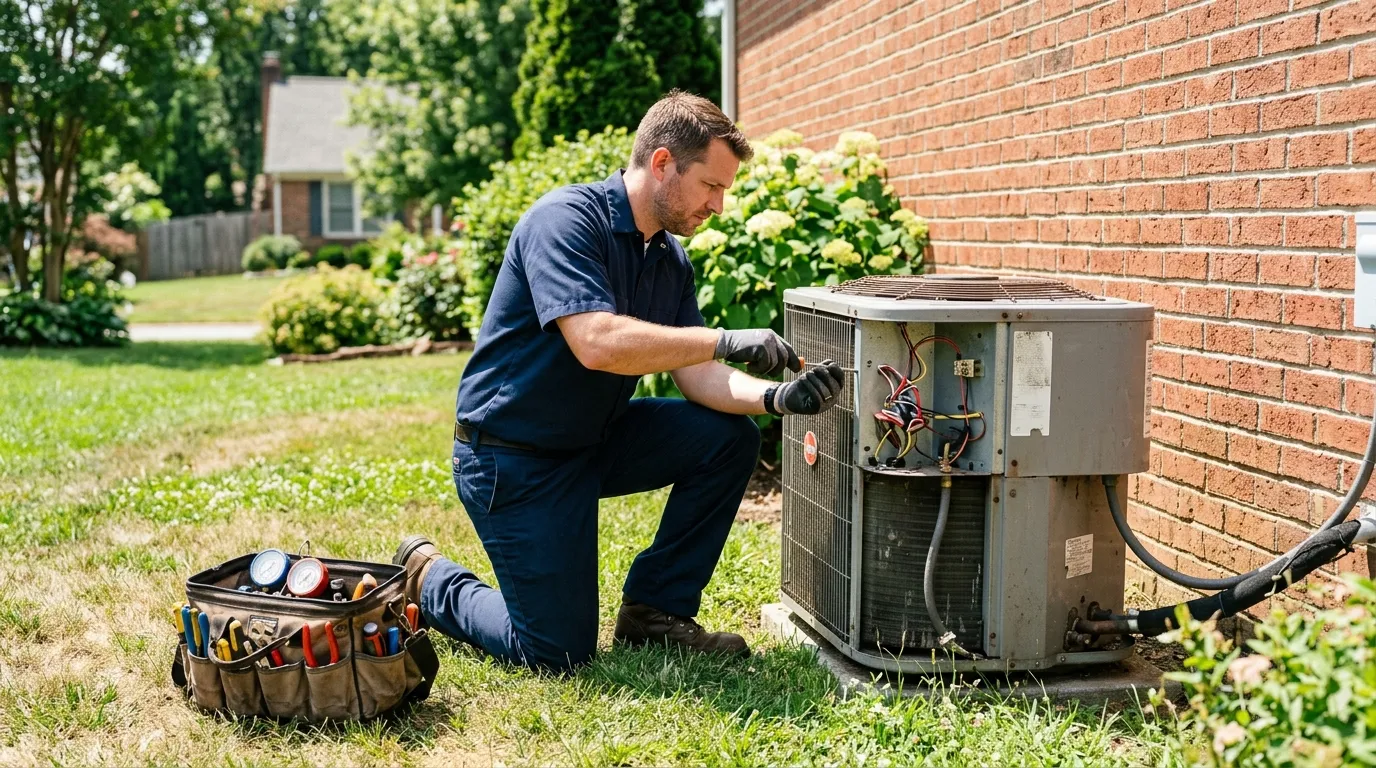
What is AC repair digital marketing?
AC repair digital marketing is everything your company does online to turn people with a broken AC into booked service calls. It rests on five foundations: your Google Business Profile, your website, your reviews, your response speed, and your follow-up. Paid ads sit on top of those five. They are the roof, not the foundation.
Here is the part most companies get backwards. They start with ads, because ads feel like a faucet you can just turn on. But ads pour water into a bucket, and most HVAC companies have a leaky bucket: calls that ring out, website forms that sit for hours, quotes that never get a second touch. Pour water into that bucket and it runs straight out the holes, onto your competitors' floors.
So the blueprint below runs in a deliberate order. Steps 1 through 5 fix the bucket. Steps 6 and 7 fill it.
Step 1: Win the Google map pack
Search for AC repair in your city and look at the results. Before any regular website, there is a map with three businesses under it. That box is called the map pack, and it takes most of the local clicks and calls. Your Google Business Profile is how you get into it.
Do this:
- Claim and verify your profile. If you have never logged into your Google Business Profile, that is day one.
- Pick the right primary category. Use "Air conditioning repair service" or "HVAC contractor," whichever matches most of the work you want.
- List every service you offer. AC repair, AC installation, heat pump repair, furnace repair, maintenance plans, emergency service. Every service you list is a search you can show up for.
- Match your name, address, and phone everywhere. Your profile, your website, and every directory should show the exact same details. Small mismatches quietly hold you back.
- Add real photos every month. Your trucks, your techs, finished jobs. Google favors active profiles, and homeowners trust real photos far more than stock ones.
- Answer questions, messages, and reviews fast. Google notices responsiveness, and so does every homeowner reading your profile.

We wrote a full guide on this: how contractors win the Google map pack. The short version: the map pack rewards complete profiles, fresh reviews, and fast responses. All three are weekly habits, not one-time setup.
Step 2: Build a website that books jobs, not one that just looks nice
Your website has one job: turn a visitor into a call or a booking. Pretty is optional. Fast and clear are not.
Your site needs:
- A tap-to-call phone number at the top of every page. Most AC repair searches happen on a phone, in a hot house.
- One page per service. A page for AC repair. A page for AC installation. A page for furnace repair. Not one crowded "Services" page, because Google matches specific pages to specific searches.
- One page per city you serve. If you want calls from a nearby town, that town needs its own page describing your work there.
- Proof everywhere. Reviews, photos of real jobs, your license number, your guarantee.
- Speed. A homeowner sweating at 9 PM will not wait for a slow page. They hit back and tap the next result.
- One clear next step on every page. Call now or book online. Nothing else competing for attention.
This is what SEO focused website design means in practice. It is also what makes every other step pay off, because the map pack and your ads both send people here expecting to book.
Step 3: Get new reviews every single week
Reviews are the most trusted thing about your business that you do not write yourself. Homeowners read them before calling, and Google counts them for ranking. Both the number and the freshness matter. Twenty reviews from three years ago reads like a company that stopped trying. A few new reviews every week reads like the busy, trusted shop everyone calls.
The system is simple:
- Ask every happy customer the same day. The best moment is right after the cold air comes back on. Gratitude fades fast.
- Send a text with a direct link. Do not make them search for your profile. One tap should open the review box.
- Make the ask automatic. If it depends on a tech remembering at 5 PM on a Friday, it will not happen. Wire it in so every finished job triggers a review request on its own.
- Reply to every review. Thank the good ones. Answer the bad ones calmly and helpfully, because future customers read your replies too.
Step 4: Answer every call, in seconds, around the clock
Here is the hard truth about this industry: a broken AC is an emergency, and emergencies do not leave voicemails. When your phone rings out, the homeowner does not wait for a call back. They dial the next company on the map. You paid to make that phone ring, and someone else got the job.
This is the biggest leak in most HVAC companies, and it leaks worst on your best days. A heat wave creates the most calls and the most missed calls at exactly the same time, because every tech is elbow-deep in a repair when the phone rings.
Plug it like this:
- Something must always answer. An AI voice assistant can pick up every call, day or night, greet the caller naturally, answer the routine questions, and book the appointment straight onto your calendar. It can handle many calls at once, which no human team can.
- Missed call, instant text back. If a call does slip through, a text within seconds saying "Sorry we missed you, how can we help?" keeps the homeowner from moving on.
- Web leads get a reply in seconds, not hours. The first company to respond usually wins the job. We call this speed to lead, and it beats price more often than you would think.
If you want to see what one unanswered ring really costs, read the real cost of a missed call. It is never just one job. It is the customer, their repeat work, and their referrals, all at once.
Step 5: Follow up until every lead has an answer
Not everyone books on the first call. Some homeowners are collecting three quotes. Some got busy. Some are waiting on a paycheck. Most companies call once, then go silent. That silence is where jobs go to die.
A simple CRM and follow-up system closes the gap automatically:
- Every new lead gets a sequence. A friendly check-in the next day. Another a few days later. Short, helpful, low pressure.
- Every quote gets chased. Your stack of old estimates is not dead. It is one of the cheapest sources of revenue you have. Here is how follow-up turns old quotes into jobs.
- Every past customer gets seasonal reminders. Spring tune-up time. Fall heating check. Filter reminders. Maintenance messages keep your number in their phone and your trucks busy between emergencies.

Follow-up is the highest-return work in this whole blueprint, because you already paid for these leads once. Working them again costs almost nothing.
Step 6: Now, and only now, turn on paid ads
With the bucket fixed, ads stop being a gamble and start being simple math: leads come in, they get answered, they get booked, they get followed up. Here is the order that works for AC repair:
- Google Local Services Ads first. These show at the very top with a Google badge, and you pay per lead instead of per click. For emergency services like AC repair, they are usually the best first dollar you can spend.
- Google Search ads second. Target the searches where someone needs help today: "emergency ac repair" and "ac not cooling" plus your city. High intent, right moment.
- Skip broad awareness ads for now. Nobody needs to be convinced to want cold air in summer. Spend where the need already exists.
Season matters too. Demand explodes in the first real heat of summer, so have campaigns ready before it hits, not after. This is the core of how we run lead generation for home service companies: leaks fixed first, then paid traffic onto a system that catches all of it.
Step 7: Stay visible between emergencies
Most days, nobody's AC is broken. The companies that win the emergency call in July are often the ones the homeowner has quietly seen all year. That is what social media for home service companies is actually for. Not going viral. Being remembered.
Keep it simple and real:
- Post real jobs. Before and after photos, a tricky repair, a happy customer's porch. Real beats polished.
- Share seasonal tips. When to change filters, what that noise means, why the spring tune-up prevents the July breakdown.
- Show your people. Homeowners are letting a stranger into their house. A familiar face lowers that fence.
- Answer common questions on your website too. Every question you hear on the phone can become a helpful page that brings in searches all year.
The 30 day quick-start plan
You do not need to do everything at once. Here is the first month, one week at a time:
- Week 1: The profile. Claim your Google Business Profile. Fix the category, services, hours, and service area. Make your name, address, and phone match your website exactly. Add ten real photos.
- Week 2: The phone. Set up something that always answers: an AI assistant or answering coverage, plus instant missed-call text back. Start asking every completed job for a review by text, every single day.
- Week 3: The website. Put a tap-to-call number at the top of every page. Build separate pages for your top three services and your main city. Set up follow-up sequences for new leads and open quotes.
- Week 4: The push. Send a friendly reactivation message to your old quote list. If calls are getting answered and leads are getting followed up, start Local Services Ads. Keep the weekly photo and review habits running.
Five mistakes that waste HVAC marketing money
- Buying ads before fixing the phone. Paid leads that ring out are donations to your competitors.
- One giant services page. Google matches specific pages to specific searches. One page per service, one page per city.
- Review bursts instead of review habits. Thirty reviews in one week, then nothing for a year, looks worse than two a week forever.
- Office-hours-only response. AC failures love nights and weekends. Your answering and follow-up must run around the clock.
- Treating this as a project instead of a system. Everything in this blueprint is a habit that runs every week. The setup is the easy part. The running is what wins.
The bottom line
AC repair digital marketing is not a mystery and it is not magic. It is a short list of foundations, built in the right order: show up on the map, look trustworthy when they check, answer instantly when they call, follow up until they book, and only then pay for more volume. Every step in this blueprint is something you can start this week, and we put together an honest look at doing it yourself versus hiring an agency if you are weighing that choice.
Want to know exactly where your own bucket leaks? Grab the free lead leak checklist, or get a free Digital Presence Audit and we will map it for you. And if you would rather have the whole blueprint built and run for you while you run jobs, book a free discovery call.